
Why Test the Complete Powertrain — Not Just the Motor
A motor that achieves 95% efficiency on a standalone test bench can deliver only 88% system efficiency when installed in a vehicle — because gearbox losses, differential losses, pérdidas de conmutación del inversor, and thermal interactions between components all compound in ways that cannot be predicted from individual component tests alone.
The EV powertrain test system (EVP) addresses this by coupling the complete drivetrain — motor, inversor, reduction gearbox, and differential — to a dynamometer at the axle or wheel end. This is the only configuration that captures real-world system efficiency, NVH behavior, and thermal performance before vehicle integration.
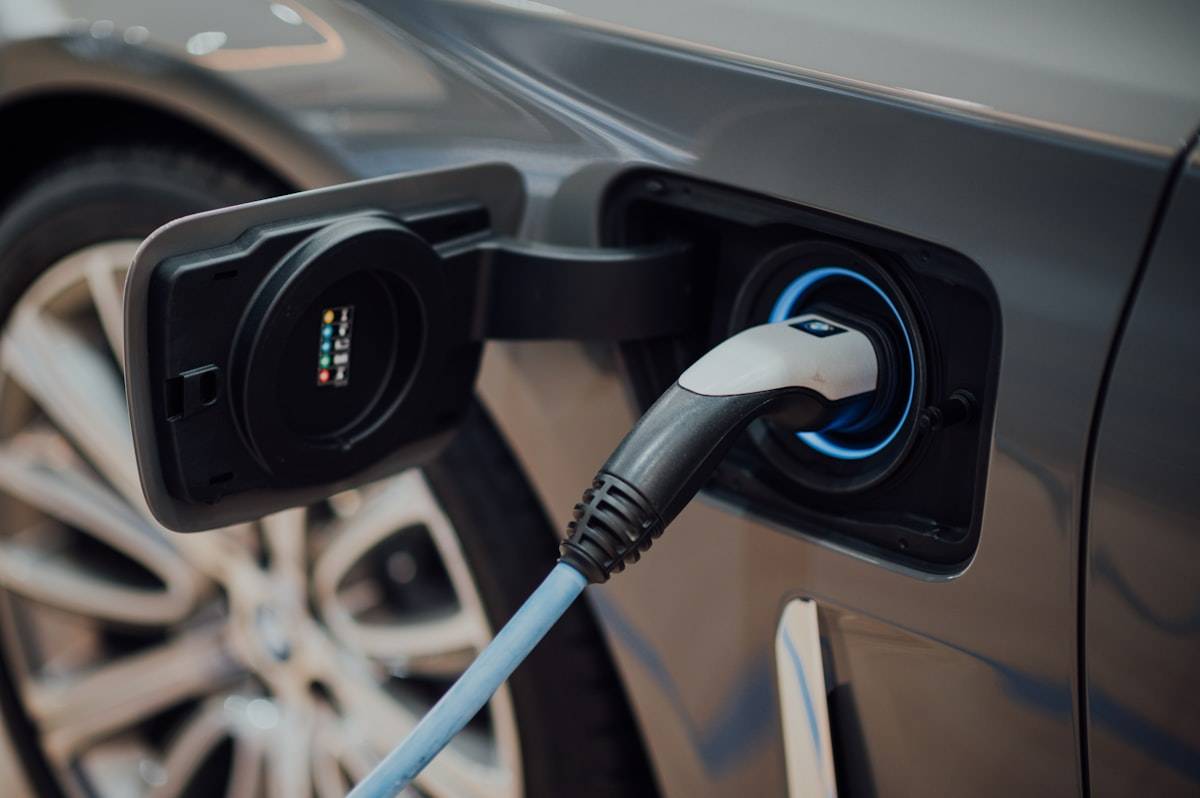
EV Powertrain vs. Banco de pruebas de motores EV: Key Differences
| Parámetro | EV Motor Test (EVM) | EV Powertrain Test (EVP) |
|---|---|---|
| Test object | Motores + inverter only | Motores + inversor + caja de cambios + differential |
| Mechanical interface | Motor output shaft | Axle flanges / wheel hubs |
| Torque measurement | Motor shaft (input to gearbox) | Axle end (output from drivetrain) |
| Medición de eficiencia | Motores + inverter system efficiency | Total drivetrain efficiency including gearbox |
| NVH sources captured | Motor electromagnetic NVH | Motores + gearbox gear mesh + differential |
| Cooling integration | Motor cooling circuit only | Motores + gearbox oil cooling circuit |
| System complexity | Medio | Alto |
What Does an EV Powertrain Test System Test?
Pruebas de rendimiento
The EVP system covers all motor-level performance tests plus drivetrain-specific items:
- Continuous output torque and power — measured at the axle end
- Peak output torque and power — vehicle-level acceleration capability
- Regenerative braking efficiency — energy recovered at axle end returned to DC bus
- T-N characteristic curve — drivetrain output torque vs. output speed
- Gear ratio and transmission efficiency — mechanical efficiency of reduction gear at each operating point
- Differential torque distribution — for twin-motor or active torque vectoring systems
NVH Tests
- Gear mesh noise — frequency analysis of gearbox noise at each speed and load
- Whine order analysis — identification of gear mesh orders and their harmonics
- Structure-borne vibration — vibration transmitted from gearbox to motor housing and mounting frame
- Airborne noise — sound pressure level measurement at standardized positions
- Rattle and clunk — transient NVH events during load reversals and engagement
Thermal Tests
- Motor thermal map — winding, cojinete, and housing temperatures under sustained load
- Gearbox oil temperature rise — thermal equilibrium of gear lubricant
- Coolant circuit validation — coolant flow rate, inlet/outlet temperatures, cooling capacity
- Thermal derating characterization — how much output is reduced when temperatures approach limits
Endurance and Durability Tests
- Drive cycle simulation — WLTP, CONSEJO ECONÓMICO Y SOCIAL, or custom drive cycle profiles replicated on the test bench
- Ciclismo térmico — repeated heat-up and cool-down cycles to stress thermal interfaces
- Overload endurance — sustained peak torque operation beyond rated duration to accelerate aging
Drive cycle simulation screen showing WLTP cycle torque-speed profile with real-time motor response overlaid
Arquitectura del sistema: EVP Series
Modular Design Principle
The EVP system uses a modular architecture that can be configured for different drivetrain layouts:
- Single-motor, single-speed reducer — the most common passenger EV configuration
- Dual-motor system — front + rear axle tested simultaneously or independently
- Multi-speed transmission — for commercial EV applications with 2-speed or 3-speed gearboxes
- eAxle (integrated motor-gearbox-differential unit) — growing segment for compact passenger EVs
Key Components
Dynamometer Unit
For axle-end testing, two synchronized dynamometers connect to the left and right axle flanges. Each dynamometer is independently controlled, enabling torque vectoring simulation and asymmetric load testing. Dynamometer power ratings from 100 kW a 400 kW per axle cover all passenger and light commercial EV applications.
High-Voltage Power Supply
A bidirectional DC power supply (100–1,000 V, arriba a 500 A) powers the inverter under test, simulating the vehicle battery. The supply regenerates energy back to the grid during regenerative braking tests — critical for energy efficiency at high power levels.
High-Precision Torque Measurement — Dual Position
The EVP system installs torque sensors at two positions simultaneously:
- Motor shaft position — measures motor output torque before gearbox
- Axle end position — measures drivetrain output torque after gearbox and differential
The ratio of axle-end torque to motor-shaft torque, corrected for speed ratio, directly gives gearbox mechanical efficiency — continuously and in real time across all operating points.
Environmental Chamber (Opcional)
An integrated thermal chamber surrounds the drivetrain assembly and can control ambient temperature from -40°C to +120°C. This enables cold-start performance testing (critical for CIS and Nordic markets) and high-ambient-temperature endurance testing (relevant for Middle East applications).
EVP System Specification Reference
| Parámetro | Especificación |
|---|---|
| Motor power range | 50 kW – 800 KW |
| Maximum motor speed | 20,000 rpm |
| Maximum axle torque | 10,000 Nuevo Méjico |
| DC bus voltage | 200 V – 1,000 V |
| Motor torque sensor accuracy | ±0,1 % escala completa |
| Axle torque sensor accuracy | ±0,1 % escala completa |
| Power analyzer accuracy | ±0,05% |
| Dynamic signal channels | 16–32 channels, 24-poco, 51.2 kS/s |
| Dynamometer configuration | Single or dual axle |
| Recuperación de energía | AFE, >95% eficiencia |
| Drive cycle simulation | WLTP, CONSEJO ECONÓMICO Y SOCIAL, custom profiles |
| Environmental chamber range | -40°C to +120°C (opcional) |
| Compliance standards | GB/T 18488, GB/T 19752, CEI 60034 |
Real-World Application: eAxle Validation
The eAxle — an integrated unit combining motor, inversor, and single-speed reduction gear in a single housing — is the dominant architecture for new passenger EV programs. Testing an eAxle on an EVP system requires:
- Mounting the eAxle assembly in the test fixture with axle stubs connected to left and right dynamometers
- Connecting the HV inverter terminals to the bidirectional DC supply
- Installing coolant circuits for motor and gearbox cooling
- Connecting all signal cables: torque sensors, termopares, vibration accelerometers, resolver/encoder signal
- Running the automated test sequence: performance map, NVH sweep, thermal soak, drive cycle simulation
A complete eAxle validation program on an EVP system typically takes 5–10 test days for a new design, 1–2 days for production lot acceptance testing.
Preguntas frecuentes
Can an EVP system test both front-wheel-drive and rear-wheel-drive configurations?
Sí. The mechanical interface adapters accommodate different axle configurations. For AWD (all-wheel drive) systems with independent front and rear motors, each motor-gearbox unit is tested independently unless a tandem test cell with four dynamometers is available.
What is the difference between testing an eAxle and testing a separate motor + caja de cambios?
An eAxle is a pre-integrated unit with a shared housing — you connect at the axle flanges only. A separate motor + gearbox requires two mechanical interfaces (motor shaft and gearbox output shaft) and intermediate coupling hardware. eAxle testing is generally simpler to set up but requires higher-torque axle dynamometers since gearbox multiplication is already integrated.
How is gearbox efficiency measured on an EVP system?
Simultaneously: motor shaft torque × motor shaft speed = mechanical power input to gearbox. Axle torque × axle speed = mechanical power output from gearbox (accounting for speed ratio). Gearbox efficiency = output power / potencia de entrada. This calculation runs continuously in the test software at each operating point.
Does the test system include inverter testing capability?
Sí. The power analyzer measures both the DC bus (input to inverter) and the 3-phase AC terminals (output from inverter to motor), allowing inverter efficiency calculation separately from motor efficiency. Overall system efficiency = (axle mechanical output) / (DC bus electrical input).
What markets are driving demand for EV powertrain test systems?
China remains the largest market, driven by GB/T 18488 type approval requirements. The Middle East is growing rapidly as regional EV mandates take effect. Sudeste Asiático (Thailand, Indonesia, Vietnam) is emerging as a production hub for both Chinese and Western EV brands, creating demand for local test capabilities. CIS markets (Russia, Kazakhstan) are increasing EV adoption with local content requirements that necessitate in-country validation capability.
Conclusión
The EV powertrain test system is the essential tool for validating complete electric drivetrains before vehicle integration. By measuring efficiency, Nvh, and thermal performance at the system level — not just the motor level — engineers identify integration problems that would otherwise surface only in expensive vehicle-level testing.
EconoTest’s EVP series covers single-motor to dual-motor configurations from 50 kW a 800 KW, with full drive cycle simulation capability and compliance with Chinese and international EV standards.
→ Contáctenos to discuss your drivetrain configuration and testing program requirements.
Artículos relacionados
- Guía del banco de pruebas de motores de accionamiento EV
- Pruebas de motores de motocicletas eléctricas
- Banco de pruebas de motores de bicicletas eléctricas de tracción media
Habla con un ingeniero
Necesita ayuda para seleccionar el equipo de prueba?
Cuéntanos tu tipo de motor, rango de potencia y requisitos de prueba: recomendaremos la configuración correcta del banco de pruebas dentro de 24 horas.