
力量, 速度, 扭矩: The Essential Guide to Dynamometer & Test Bench Configuration
Selecting the right dynamometer system hinges on three critical parameters. This guide helps engineers and procurement teams understand the interdependence of 力量 (p), 速度 (N), and Torque (时间) to correctly define the operational envelope and size their test bench configuration for optimal performance and cost.
The Core Triangle: Interdependence of Test Parameters
P = (2 π τ N) / K
(Where P is Power, τ is Torque, N is Speed, and K is the unit conversion constant.)
This fundamental relationship dictates that you can never select these three variables independently. When any two are defined, the third is automatically constrained. Understanding their individual impact is key to successful test bench configuration.
Analyzing Impact: 扭矩, 速度, 和电源
► 1. 最大扭矩 (τ最大限度): Sizing the Mechanics
Torque is the primary factor determining the mechanical robustness, physical size, and structural strength of your test bench components (shafts, 联轴器, and mounting fixtures).
- Mechanical Limit: Dictates the sheer strength required for the dynamometer frame.
- Sensor Selection: Defines the required range of the Torque Transducer.
- Key Takeaway: Base your torque requirement on the maximum transient (peak) 扭矩 of your DUT, not just the continuous rated value.
► 2. 最大速度 (N最大限度): Defining the Technology
Speed is critical for selecting the appropriate dynamometer technology and ensuring vibrational stability.
- Dynamometer Type: High-speed testing often mandates precision-balanced AC Electric Dynamometers; low-speed, high-torque may utilize hydraulic brakes.
- Vibration Control: High speed drastically increases the importance of shaft alignment, critical speed analysis, and dynamic balancing of all rotating components to maintain stability and prevent catastrophic failure.
- Key Takeaway: Wide speed ranges may necessitate **gearboxes** or a **dual-dynamometer setup** to maintain high accuracy at both low and high RPMs.
► 3. Maximum Power (p最大限度): Utility and Cooling
力量 (the product of torque and speed) determines the required electrical capacity and thermal management.
- Thermal Management: For traditional dynos, power dictates the heat rejection capacity (size of cooling towers, heat exchangers).
- Electrical Demand: Defines the required rating of the VFD (Variable Frequency Drive) and the capacity of the facility's power supply.
- Key Takeaway: For high-power systems, always prioritize **Energy Regenerative Systems** to minimize utility bills and reduce thermal load on the facility.
Interpreting the Test Envelope: The P-N-T Curve
The Test Envelope is a graphical representation of the system's operational limits, crucial for dynamometer selection:
- Constant Torque Region (Low Speed): The dynamometer operates at maximum τ最大限度. Power rises linearly with speed. This region is mechanically limited.
- Constant Power Region (Mid to High Speed): Once the system reaches its rated power, the torque must decrease proportionally as speed increases. This region is limited by the electrical rating (VFD capacity).
- High Speed Region (High Speed / Low Torque): Often limited by the mechanical constraints of the dynamometer (bearing limits, critical speed), where both torque and power begin to drop off.
If your required test points fall outside this calculated P-N-T envelope, your chosen system is inadequate.
Practical Guide: Configuring Your Test Bench
Follow this logical sequence to accurately define the specifications for your new testing system:
- Define Maximum Torque (τpeak): Determine the highest peak torque your DUT will ever see. This single value dictates the strength of your couplings and the size of your load cell.
- Define Maximum Speed (N最大限度): Establish the highest required test RPM. This determines the necessary balance grade and technology (例如。, high-speed vs. low-speed dynamometer).
- Calculate Maximum Power (p最大限度): Use the formula P = f(τ, N) to calculate the maximum required electrical rating for the load absorber/driver system.
- Check Continuous Duty Cycle: Verify that the dynamometer's continuous operating limits (usually lower than peak) can handle your long-duration durability tests (例如。, 24/7 测试).
By meticulously defining the three corners of this operational triangle—**maximum torque, 最大速度, and maximum power**—you ensure your test bench is correctly sized for performance, cost-efficiency, and longevity.
航空航天测试解决方案
我们提供Torquemeters, 联轴器, 飞轮, 主轴 & 用于直升机和航空发动机部件测试的试验台
海洋测试解决方案
我们为海洋发动机提供测试解决方案, 推进系统, 电动机, 发电机组, 变速箱, 辅助电力系统, 废气系统, 和船舶备件
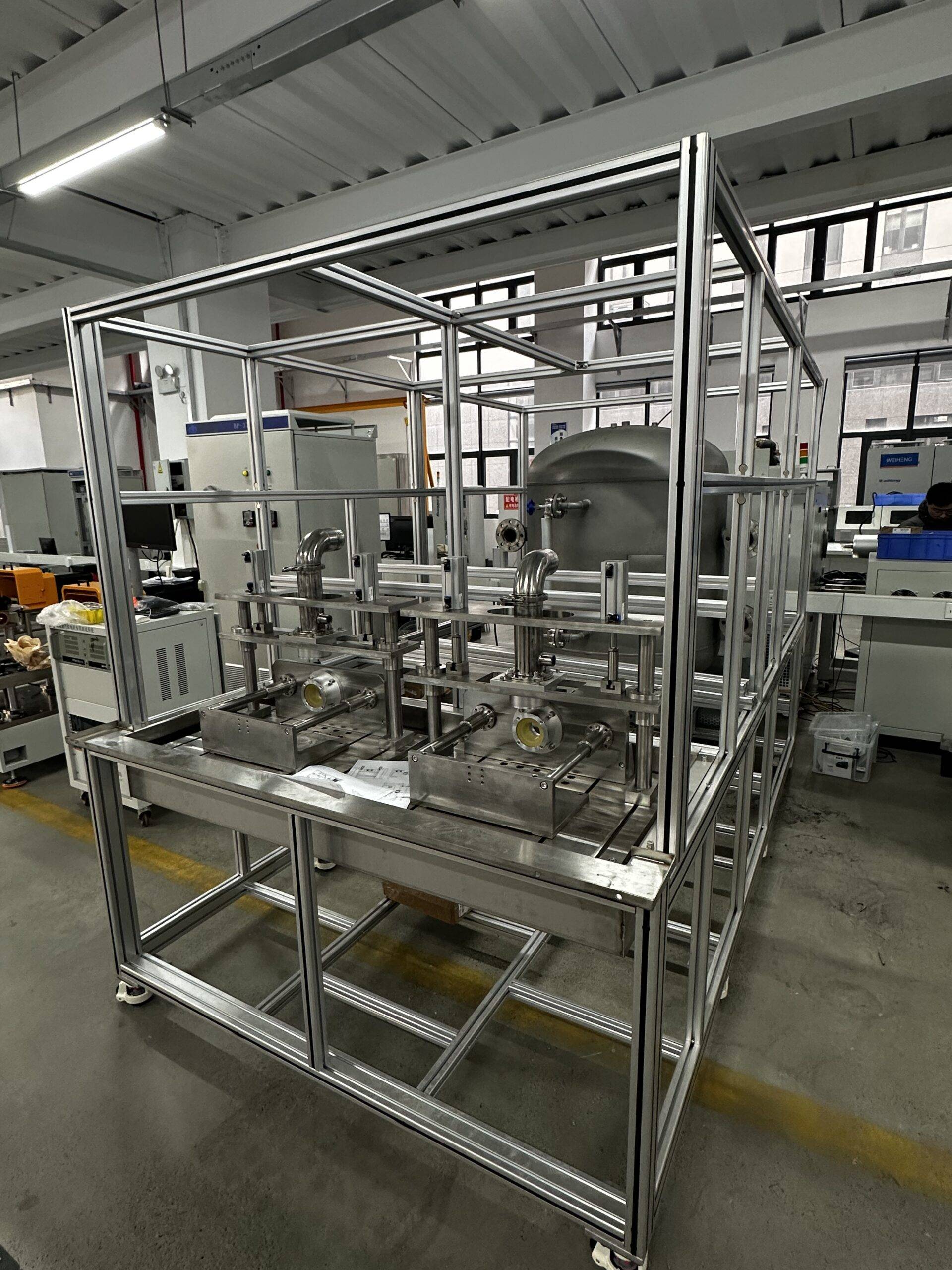
水泵试验台
水泵测试系统是一种用于水泵性能测试的专用设备, 通常用于评估关键参数(例如流量), 头, 力量, 和效率.