
Wheel Reducer Test Bench
Wheel Reducer Test Bench: Specialized Validation for Final Drive Systems
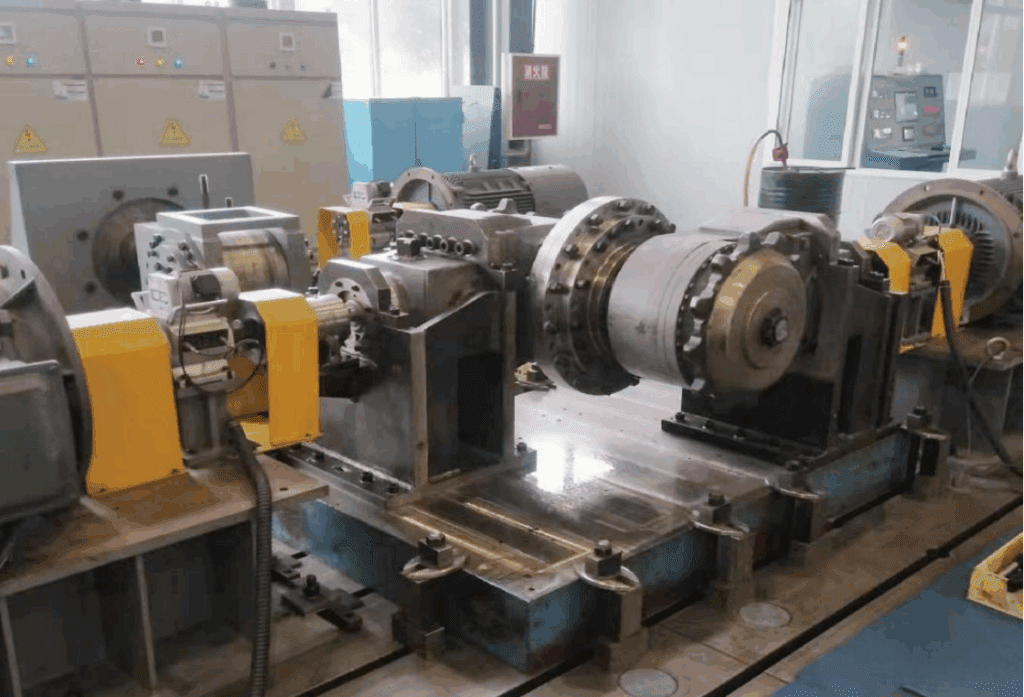
The wheel reducer is the critical final stage component in heavy-duty and specialized vehicles. Our dedicated Wheel Reducer Test Bench utilizes a high-precision Magnetic Powder Load Feedback System and automated programming to simulate real-world operational cycles, ensuring unparalleled reliability, efficiency, and durability validation for final drive gearboxes.
Core Technology: Magnetic Powder Load and Programmatic Control
Precision Load Application
- Load Feedback Mechanism: The system employs a reliable **Magnetic Powder Load Feedback System** to apply controllable, stable braking torque to the wheel reducer.
- Dual Control Modes: The control system supports **Manual and Automatic Dual Modes**, offering rapid switching for precise R&D adjustments or continuous QA production testing.
- High Compatibility: Designed with universal fixturing and couplings to accommodate various reducer sizes and input/output shaft specifications for different wheel applications.
Automated Durability and Diagnostics
- Programmed Testing: Supports executing highly detailed, multi-step test procedures (including specified time, speed, torque, and other parameters) autonomously.
- Full Process Recording: The system automatically completes the test cycle, continuously recording all dynamic data, ensuring complete test integrity and traceability.
- Integrated Fault Diagnosis: Features built-in **fault diagnosis capability and supervised monitoring**, providing timely alarms and protective shutdown functions to safeguard the DUT and the test bench.
Full-Spectrum Wheel Reducer Testing Capabilities
The robust system covers all required validation stages for wheel reducers, from initial efficiency checks to accelerated life-cycle testing:
| Test Mode / Project | Key Performance Indicator (KPI) | Engineering Objective |
|---|---|---|
| No-Load Test | No-load power consumption, starting torque. | Verifies baseline friction and internal resistance characteristics. |
| Efficiency Test | Power transfer efficiency ($\eta$), thermal stability. | Measures energy loss and verifies performance against design specifications. |
| Durability Test (Life-Cycle) | Cumulative hours, bearing/gear wear data. | Simulates long-term operational stresses to predict product lifespan. |
| Overload Test | Maximum sustainable torque, structural stability. | Assesses safety margins and structural integrity under extreme conditions. |
| NVH Measurement | Vibration (mm/s), Noise (dB) levels, Frequency Spectrum. | Crucial for diagnosing gear meshing quality and acoustic comfort, especially in urban vehicles. |
Operational Specifications (Environmental and Utility)
The system maintains high stability and accuracy under diverse environmental conditions, ensuring reliable data acquisition:
- Ambient Temperature: -5°C to +45°C
- Noise Level: ≤ 90 dB
- Relative Humidity: ≤ 98%
- Power Supply: AC380V / 220 V ± 10%
Key Measurement and Protection Parameters
The control system supports synchronous measurement and recording of all critical parameters:
- Input/Output Power: Precise measurement of input power, output torque, speed, and braking force (制动力).
- Thermal Channels: Multi-channel temperature measurement and recording (e.g., oil, bearing, ambient) with active alarm and protection.
- Protection: Integrated safety features include over-torque, over-speed, and over-temperature protection, ensuring test safety and integrity.
Aerospace Test Solution
We provide the torquemeters, couplings, flywheels, spindles & test rigs for both helicopter and aero engine component testing
Marine Test Solution
We provide test solution for marine engines, propulsion systems, electric motors, generator sets, transmission gearboxes, auxiliary power systems, exhaust gas systems, and spare parts for ships
Water Pump Test Bench
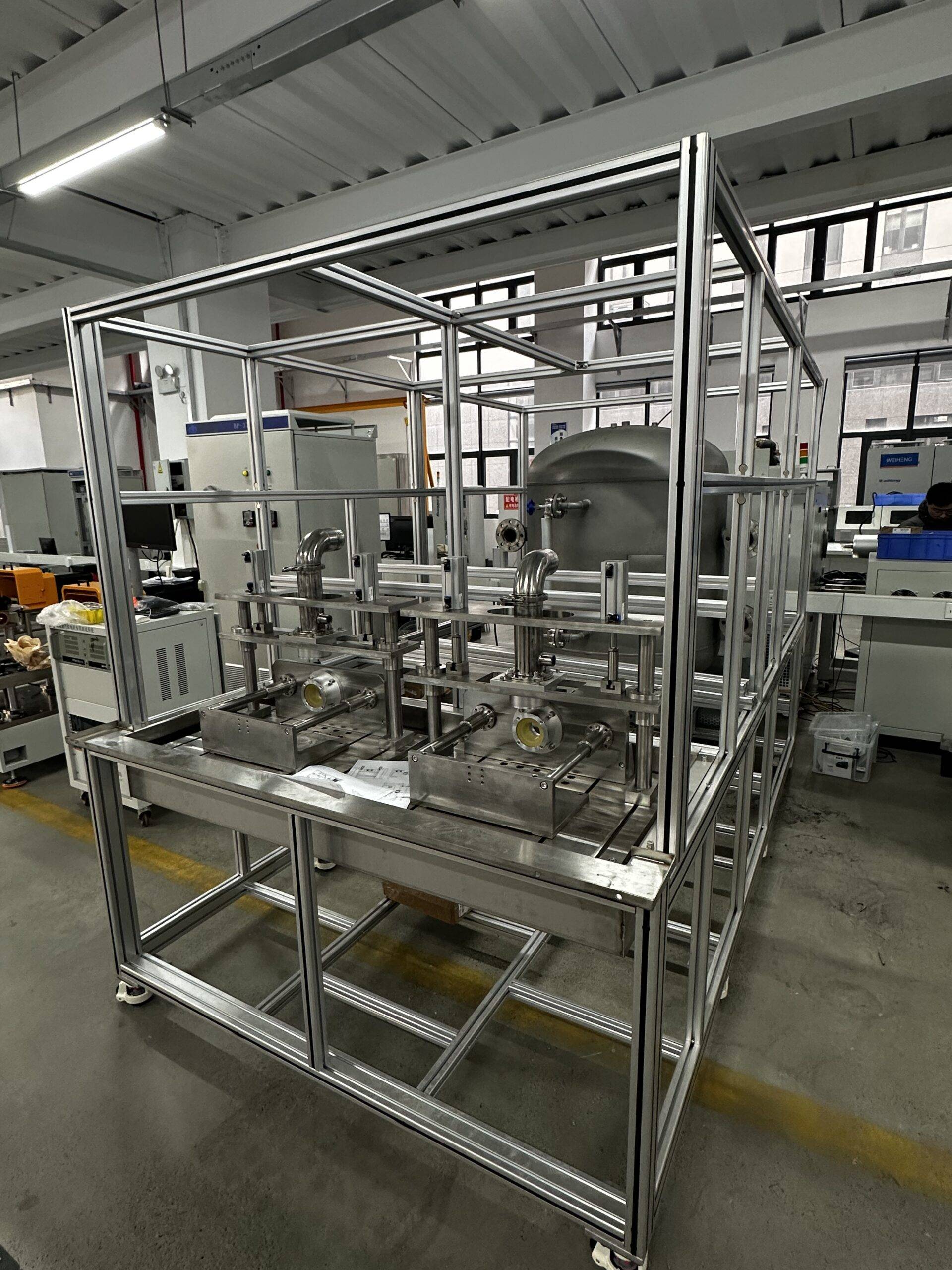
Water pump testing system is a specialized equipment used for performance testing of water pumps, commonly used to assess key parameters such as flow, head, power, and efficiency.