
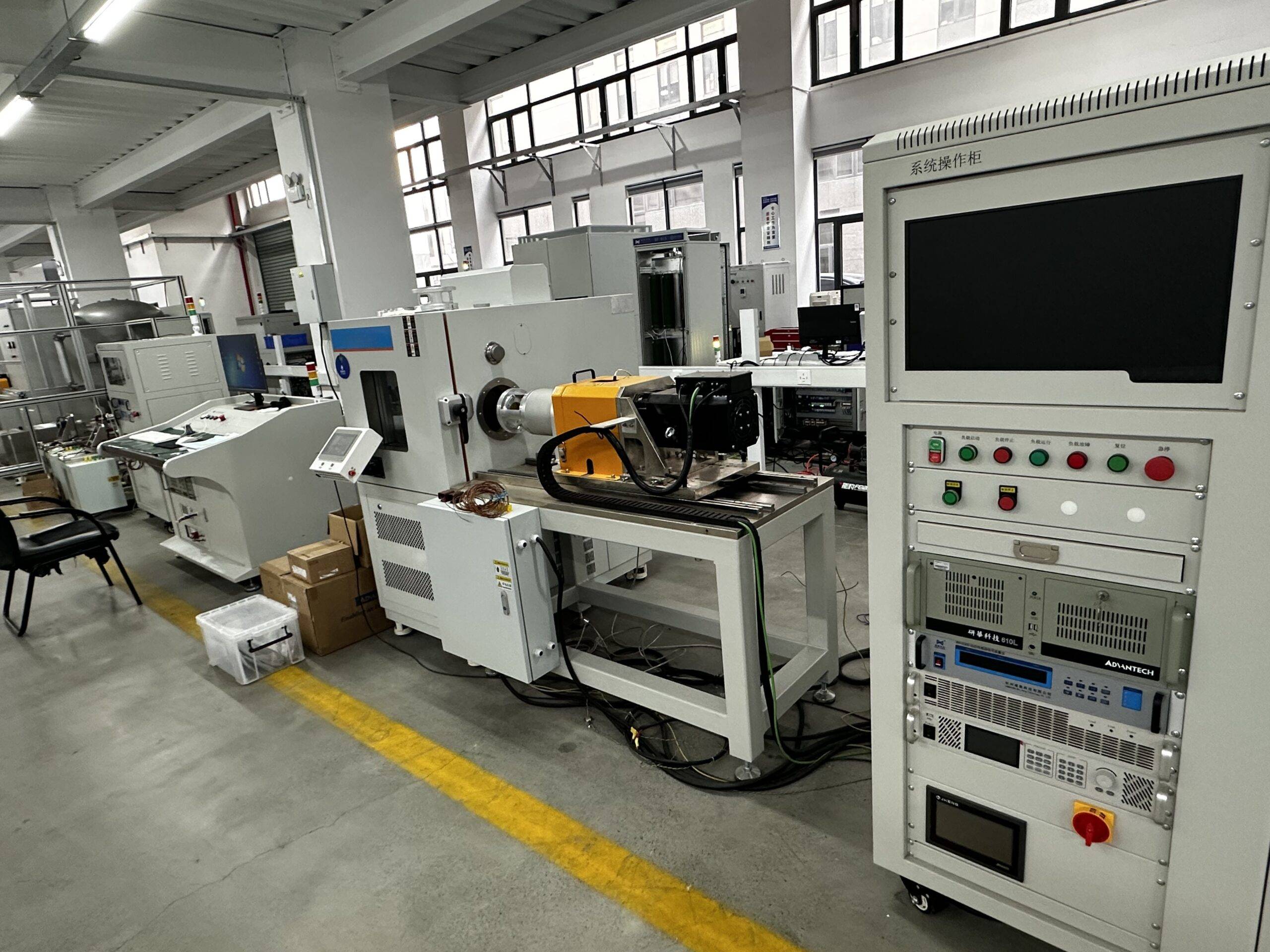
Motor test benches are essential for evaluating the performance and functionality of various types of motors. Depending on the testing objectives and application areas, motor test benches can be classified into the following categories:
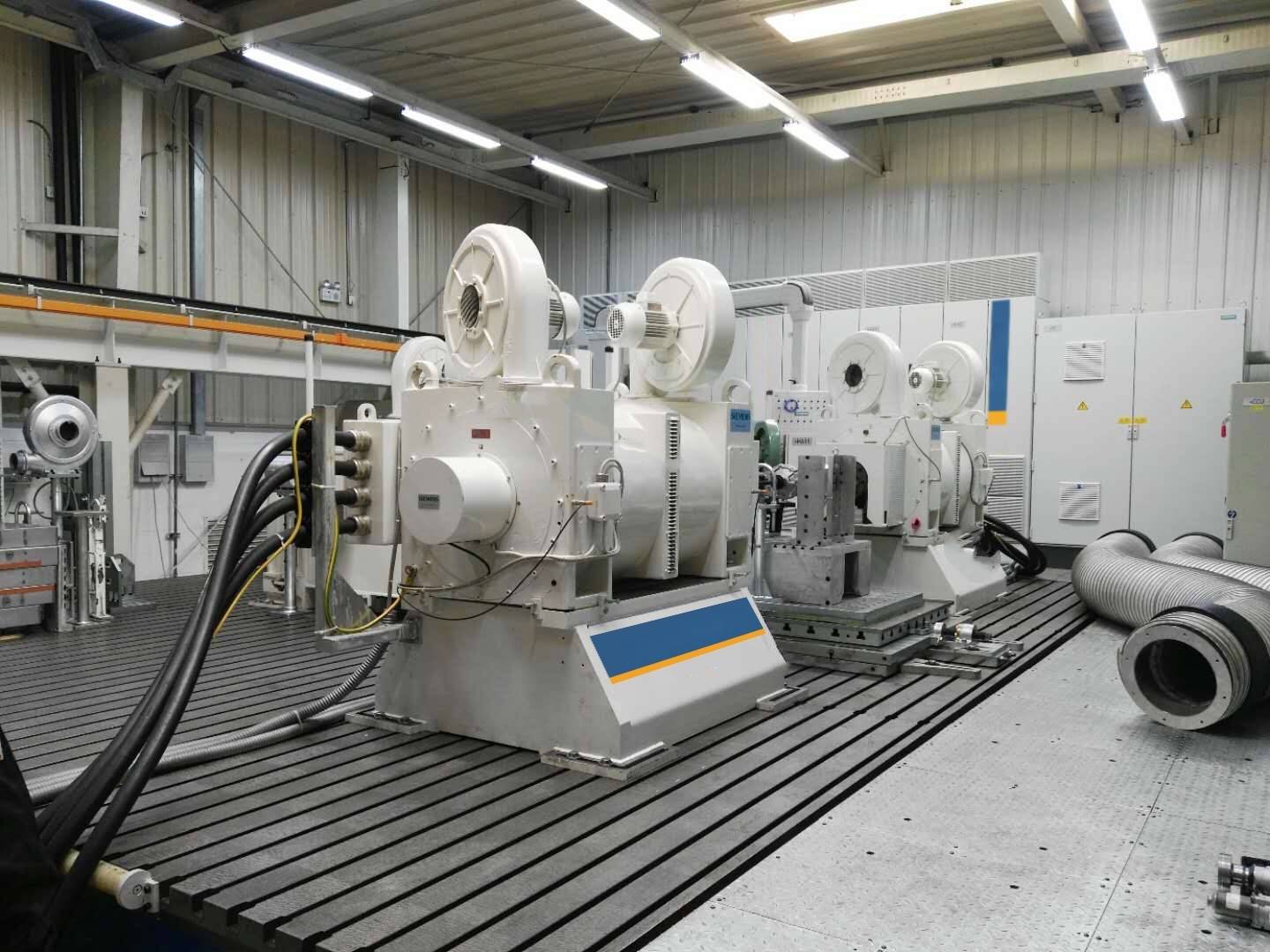
The high speed motor test bench is used to test the motor and UUT in industry as: Automative, aerospace, and Marine, can be equipped with a high-low temperature environmental chamber, power supply, power analyzer, and cooling system. 1.High-Speed High-Power Motor Test Bench 2.High-Speed Low-Power Motor Test Bench
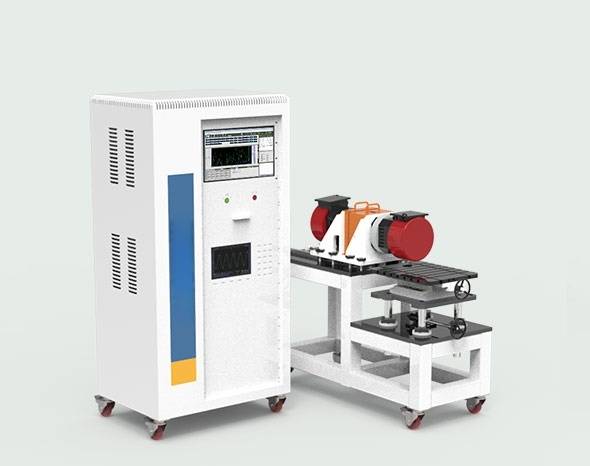
The system uses a dynamometer with a dedicated load motor, and it supports both torque mode and speed mode. The controller provides precise torque and speed control, while the load motor offers fast and accurate response. This allows for arbitrary load curve loading and waveform measurement during the motor testing process, meeting both steady-state and transient measurement requirements for motors and drives.
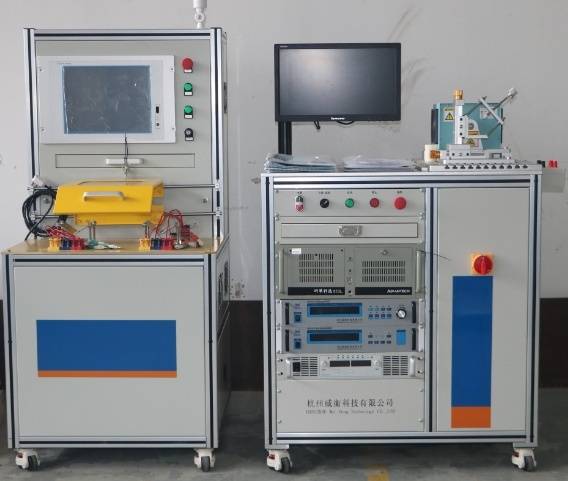
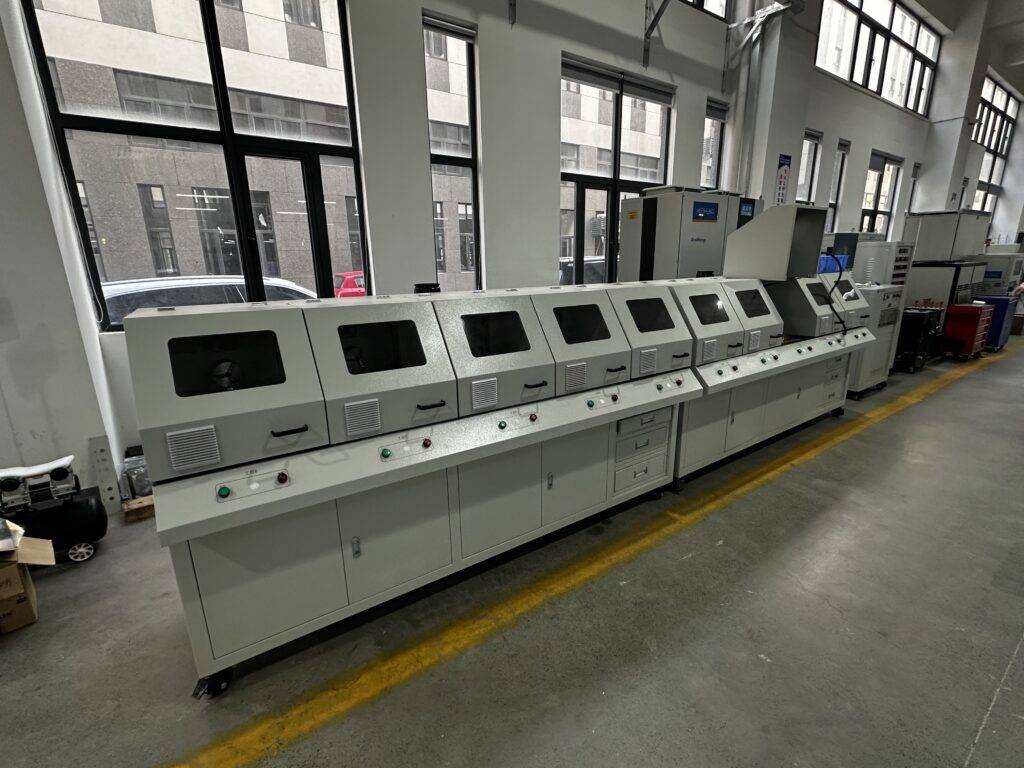
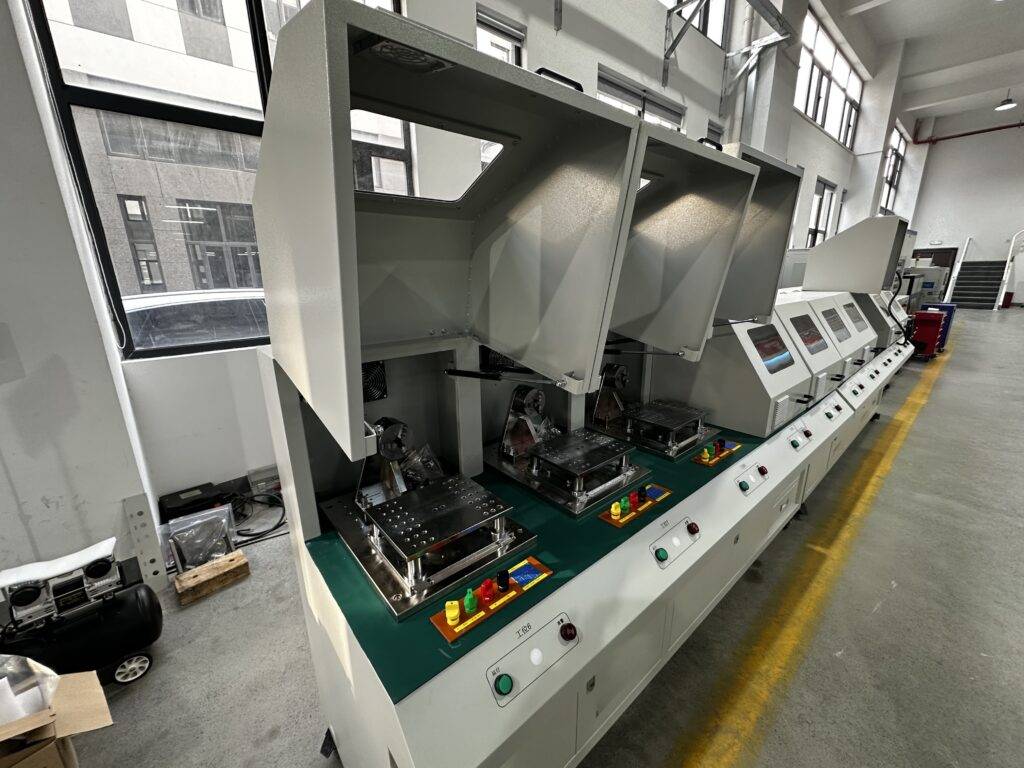
The test bench is primarily used for testing the performance of stators in various types of motors, including single-phase motors, three-phase motors, brushless motors, synchronous motors, and servo motors. It encompasses all items necessary for stator performance checks. The system allows for rapid testing of parameters such as (AC voltage withstand, insulation resistance, inter-turn insulation, and DC resistance) in one go. With a single connection, all tests are quickly completed.
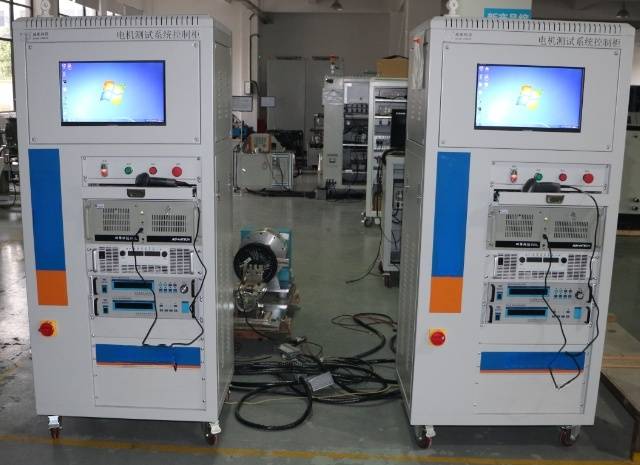
This system adopts an embedded architecture and is a professional control system software developed based on the Linux platform. It combines the stability of the Linux system with the user-friendly interface of the Windows system, enabling fast and accurate testing of the comprehensive electrical performance parameters of a complete motor. With one-time installation and a one-stop approach to completing all test items, it reduces manual intervention and enhances production efficiency.
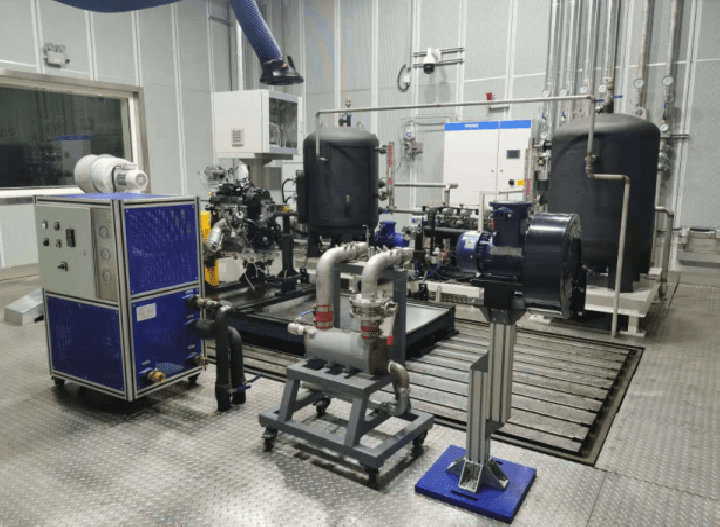
Pneumatic motors are driven by compressed air. The test bench is equipped with air compressors and pressure regulation systems to evaluate the motor's performance under different air pressures. Hydraulic motors are powered by hydraulic oil. The test bench is equipped with a hydraulic pump station, oil reservoir, and flow control systems to test the motor's performance.
We provide the torquemeters, couplings, flywheels, spindles & test rigs for both helicopter and aero engine component testing
We provide test solution for marine engines, propulsion systems, electric motors, generator sets, transmission gearboxes, auxiliary power systems, exhaust gas systems, and spare parts for ships
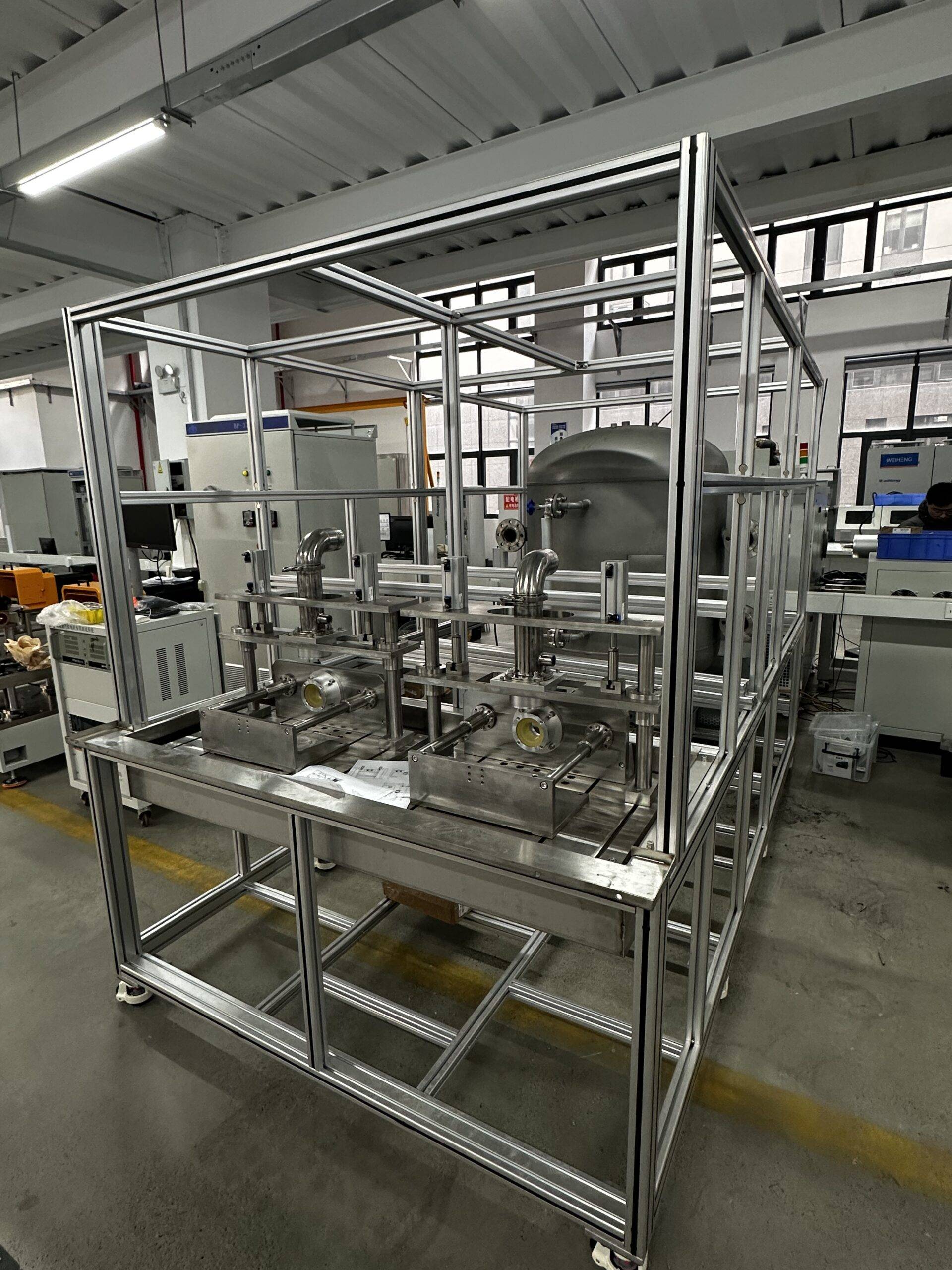
Water pump testing system is a specialized equipment used for performance testing of water pumps, commonly used to assess key parameters such as flow, head, power, and efficiency.
EconoTest motor test benches support PMSM (permanent magnet synchronous), ASM (asynchronous/induction), EESM (electrically excited synchronous), BLDC, stepper, servo, DC brushed/brushless, and universal motors. The system is configured based on the motor type, rated power, speed range, and required test parameters.
A four-quadrant dynamometer operates in both motoring and generating modes, and in both forward and reverse rotation. For EV motor testing, this means the dynamometer can apply load (regenerative braking simulation) or drive the motor under test, enabling efficiency mapping across all operating quadrants — essential for EV powertrain validation.
EconoTest high-speed motor test benches support environmental chamber testing from −50°C to +200°C with humidity range 20–98% RH. The motor cooling system manages coolant temperatures from −40°C to +110°C at flow rates of 5–40 L/min and pressures up to 350 kPa, enabling full thermal validation under real operating conditions.
High-power motor test bench models (EC-20-EP, EC-25-EP) reach 20,000–25,000 RPM at 400–500 kW rated power. Ultra-high-speed low-power series reach 100,000 RPM. For EV e-motor applications, the EC-06/55 model supports 6,000 RPM at 5,000 Nm / 500 kW. All parameters are customizable.
Standard test items include no-load and rated load performance, peak torque, peak speed, efficiency mapping (MAP), T-N curve, back EMF, torque/speed fluctuation, temperature rise, NVH (noise, vibration, harshness), EMC/EMI, locked rotor, overspeed, inertia simulation, and control system response time (torque and speed control response).
EconoTest test control systems support EtherCAT, CAN/CAN-FD, ARINC-429/664, MIL-STD-1553, and standard analog/digital I/O interfaces. DAQ sampling rates reach up to 200 kS/s per channel with PTP/IEEE-1588 timing. Data output formats include MDF4, CSV, and TDMS with automated report generation.
Yes. EconoTest motor test benches are designed to accommodate multiple motor types on the same platform with interchangeable fixtures and configurable inverter/controller settings. PMSM, ASM, and EESM motors can typically be tested on the same bench by adjusting the control parameters and coupling adapters.
Yes. The EC800 series performs stator testing (AC voltage withstand, insulation resistance, inter-turn insulation, DC resistance, rotation direction — 6 tests in under 5 seconds). The EC900 series covers complete motor factory testing including voltage withstand, insulation, resistance and no-load tests for production line integration.

© 2026 Shanghai EconoTechnology Co., Ltd. All rights reserved.
Empowering innovation through reliable testing solutions.