
Submersible motors are critical components in electric submersible pump (ESP) systems used for oil extraction in harsh downhole environments. These motors operate under extreme conditions such as high temperature, high pressure, strong corrosion, and long continuous duty cycles.
The Submersible Motor Test Bench from Econo Test is designed to accurately simulate real downhole operating conditions, enabling comprehensive performance, safety, and reliability testing before field deployment. The system ensures that submersible motors meet strict industry requirements for efficiency, insulation strength, sealing performance, vibration stability, and long-term durability.
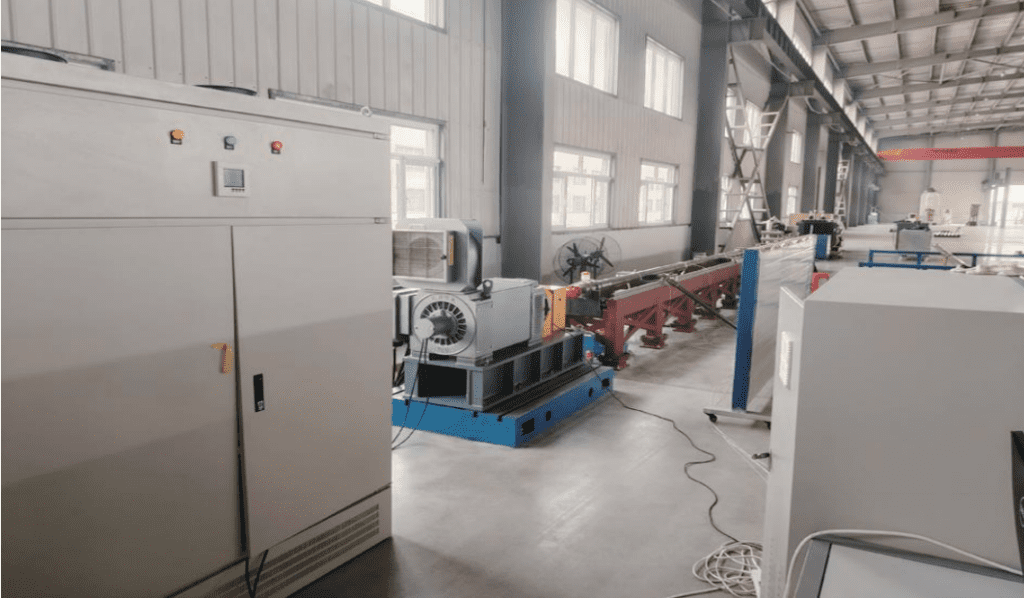
Key Features and Capabilities
Simulation of high-temperature and high-pressure downhole environments
Stable load control for long-duration endurance testing
High-accuracy measurement of electrical and mechanical parameters
Modular and scalable design for different motor ratings
Industrial-grade safety protection and automated fault diagnosis
The submersible motor test bench supports a full range of functional and reliability tests, including:
Electrical Performance Tests
No-load current, copper loss, iron loss, and mechanical loss
Rated load power, efficiency, and thermal rise
Insulation resistance and withstand voltage (AC/DC, impulse)
Mechanical & Operational Tests
Load and no-load operation stability
Vibration and noise measurement for bearing and rotor condition evaluation
Long-duration continuous operation testing
Sealing & Environmental Tests
High-pressure and high-temperature sealing performance
Leakage rate measurement under simulated downhole conditions
Corrosion resistance testing in H₂S / CO₂ environments
Submersible Motor Test Bench: Precision Reliability for Downhole Excellence
Submersible motors are the "heart" of downhole oil extraction, operating in extreme environments characterized by high temperature, high pressure, and high corrosion. Our Submersible Motor Test Bench is specifically engineered to simulate these harsh downhole conditions, providing rigorous validation of motor performance, sealing integrity, and operational reliability.
Comprehensive Testing for ESP & Downhole Motors
Electrical & Mechanical Performance
- No-Load Analysis: Precise measurement of no-load current, iron loss, and mechanical loss.
- Load Characterization: Validation of rated power, efficiency, and temperature rise curves under dynamic stress.
- Insulation Integrity: Advanced testing for power frequency and impact voltage endurance to ensure electrical safety.
Environmental & Safety Validation
- HPHT Sealing Test: Dedicated modules for measuring leakage rates under intense high-pressure and high-temperature conditions.
- Corrosion Aging: Evaluation of material durability and aging characteristics in H2S and CO2 rich environments.
- NVH Monitoring: Real-time analysis of shaft status, vibration levels, and mechanical stability to prevent premature failure.
Standardized Testing Protocols
| Test Category | Primary Parameters | Engineering Objective |
|---|---|---|
| No-Load Test | Current, Iron Loss, Mech. Loss | Baseline friction and core loss identification. |
| Load Test | Rated Power, Efficiency, Temp. Rise | Verifies thermal and electrical limits. |
| Sealing Test | Leakage Rate (HPHT) | Ensures protection against fluid ingress. |
| Insulation Test | Frequency/Impact Voltage | Guarantees dielectric strength in deep wells. |
| Corrosion Test | H2S / CO2 Aging | Material selection and longevity validation. |
Engineered for Industrial Grade Reliability
Leveraging advanced energy feedback technology and automated control systems, our test bench provides unparalleled benefits for oilfield equipment suppliers:
- High Automation: Programmable test profiles for complex R&D cycles.
- Energy Efficiency: Integrated load feedback systems to reduce power utility consumption during long-duration tests.
- Safety First: Automated protection and alarm systems for over-temperature, over-pressure, and insulation failure.